

CORE COMPETENCY 1 OF 12
Awe & Transcendence
Developing “God-Sight” in Your Recovery Journey
Awe and Transcendence is the practice of recognizing God’s presence and activity— in the world around you, and within you. By experiencing “peak moments” and practicing spiritual mindfulness, you discover meaning and purpose that transcends your immediate suffering, anchoring your healing in something far greater than yourself.
“The heavens declare the glory of God; the skies proclaim the work of his hands. Day after day they pour forth speech; night after night they reveal knowledge.”
Psalm 19:1-2
Why This Matters for Recovery
Moving Beyond Self-Absorption
When we lift our eyes to something greater, our suffering finds its proper place.
Seeking God’s Face

The biblical practice of pursuing God’s presence—learning to recognize His activity in everyday moments, even in the midst of your deepest struggles.
Peak Moments

Experiencing transcendent moments that lift you above your circumstances—glimpses of glory that remind you healing is not only possible, but promised.
Spiritual Mindfulness

Living in awareness of God’s glory, sacraments, and holy mysteries—finding the sacred woven through your ordinary days, even the hardest ones.
Meaning & Purpose

Discovering that your suffering is not meaningless—that God can transform your deepest pain into your greatest testimony and calling.
Going Deeper
Understanding Awe & Transcendence
The first step toward healing is lifting your eyes beyond yourself.
What Is Awe?
Awe is that breathtaking moment when you encounter something so vast, so beautiful, or so mysterious that your ordinary frame of reference breaks open. It’s the feeling you get standing at the edge of the Grand Canyon, holding a newborn child, or sitting in silence before the cross.
Psychologists define awe as the experience of perceiving something greater than yourself that challenges your current understanding of the world. But Scripture goes further—awe is not just an emotion, it’s an encounter. It’s what happened when Moses stood before the burning bush, when Isaiah saw the Lord high and lifted up, when the disciples watched Jesus calm the storm.
“Be still, and know that I am God. I will be exalted among the nations, I will be exalted in the earth.” — Psalm 46:10
Transcendence is what happens next—when awe lifts you out of the narrow confines of your own pain and places you in the context of something infinitely larger. Your problems don’t disappear, but they find their proper proportion against the backdrop of eternity.
Why This Matters for Recovery
Mental health struggles have a way of collapsing our world inward. Depression shrinks our vision to the darkness immediately in front of us. Anxiety fixes our gaze on threats that may never come. Addiction narrows our focus to the next fix, the next escape, the next moment of relief.
This is what clinicians call self-absorption—not selfishness in the moral sense, but a psychological state where our suffering becomes all-consuming, blocking out everything else. We lose the ability to see beyond our pain.
The Clinical Connection
Research shows that experiences of awe have measurable effects on mental health: they reduce inflammation in the body, decrease symptoms of depression and anxiety, increase feelings of connection to others, and shift our perception of time—making us feel less rushed and more present. Awe literally rewires how we see ourselves in relation to the world.
This is why cultivating awe is not a luxury—it’s a lifeline. When you practice transcendence, you’re not escaping your problems. You’re gaining the perspective needed to face them with courage, meaning, and hope.
The Biblical Foundation
Scripture is filled with invitations to awe. The Psalms alone contain over 100 references to the glory, majesty, and wonder of God. This isn’t accidental—the biblical writers understood that worship recalibrates the soul.
Consider David, a man intimately acquainted with depression, anxiety, and trauma. How did he survive? He lifted his eyes:
“I lift up my eyes to the mountains—where does my help come from? My help comes from the Lord, the Maker of heaven and earth.”
— Psalm 121:1-2
Or consider Paul and Silas, beaten and imprisoned, their feet in stocks. What did they do at midnight? They sang hymns. They chose transcendence. And the earth shook.
The pattern is consistent throughout Scripture: when God’s people are overwhelmed, they are called to look up. Not to minimize their pain, but to place it in the hands of the One who holds all things together.
“The soul that walks in love neither tires others nor grows tired. Love is the eye of the soul—and when it looks upon God, everything else fades into insignificance.” — St. John of the Cross
Wisdom from Those Who Walked Before
The saints who have gone before us understood that awe is not a feeling to chase but a posture to cultivate. Their words can guide us:
“He who has God has everything. He who does not have God has nothing. He who has God and everything else has nothing more than he who has God alone.” — C.S. Lewis
“Let nothing disturb you. Let nothing frighten you. All things are passing away. God never changes. Patience obtains all things. Whoever has God lacks nothing. God alone suffices.” — St. Teresa of Ávila
“The Christian does not think God will love us because we are good, but that God will make us good because He loves us.” — C.S. Lewis
These words were not written from ivory towers. Teresa of Ávila suffered chronic illness and depression. C.S. Lewis walked through profound grief after losing his wife. They knew suffering intimately—and they also knew that transcendence is not the absence of pain, but the presence of God in the midst of it.
A Prayer for Awe
If you’re struggling to feel awe, if your soul feels flat and your vision narrow, this prayer is for you. Pray it slowly. Pray it honestly. And trust that God meets us not where we should be, but where we are.
“Father, my eyes have been fixed on my pain for so long. I have forgotten how to see Your glory. Open my eyes. Lift my gaze. Show me the wonder I have been missing. Help me to see You in the sunrise, in the kindness of a stranger, in the words of Scripture I’ve read a hundred times. Give me eyes to see, ears to hear, and a heart that trembles before Your majesty. In Jesus’ name, Amen.” — A Prayer for God-Sight

Start Each Day with Hope
Receive free daily devotionals delivered straight to your inbox—morning and evening Scripture, wisdom from the saints, and practical steps for your recovery journey.
- Morning & Evening readings
- Wisdom from the saints
- 100% free, unsubscribe anytime
Join thousands walking the recovery journey together. We respect your privacy.
Companion Reading
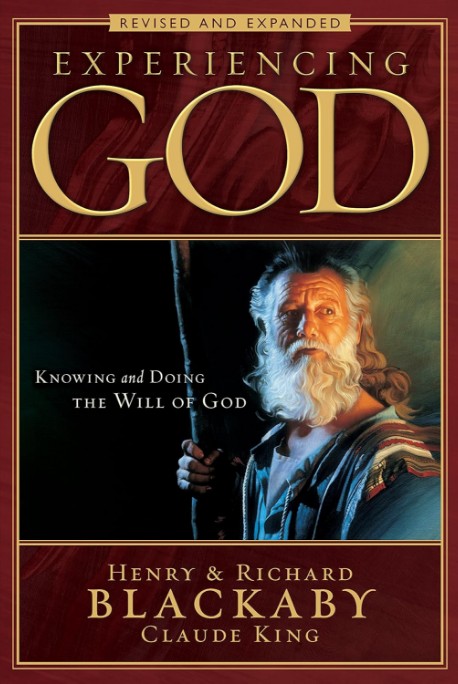
Go Deeper with the Saints
These classic devotionals pair beautifully with your recovery journey.


ABOUT US

Where This Devotional Was Born
Sanctuary Clinics is a Christ-centered residential mental health treatment center in Florida. We exist for those who have tried everything else—where clinical excellence meets authentic Christian community for complete healing of spirit, mind, and body.
- Christ-Centered Care – Faith isn’t an add-on; it’s the foundation of everything we do
- Clinical Excellence – Evidence-based psychiatric care from experts who are also believers
- Healing Community – Not a hospital with a chaplain, but an Acts 2 community living together
- Affordable & Accessible – Quality care that doesn’t require choosing between healing and financial ruin