

CORE COMPETENCY 11 OF 12
Humility
The Strength to Need Help and the Courage to Accept It
Humility is not thinking less of yourself—it is thinking of yourself less. It is the radical acknowledgment that you are not God, that you cannot heal yourself, and that your greatest breakthroughs will come not from your own strength but from your willingness to receive. In a world that worships self-sufficiency, humility is the most countercultural—and most healing—virtue you can practice.
“He has shown you, O mortal, what is good. And what does the Lord require of you? To act justly and to love mercy and to walk humbly with your God.”
Micah 6:8
Why This Matters for Recovery
The Gateway to Every Other Virtue
Humility is not weakness. It is the courage to be honest about your need.
Asking for Help

The hardest words in recovery are often “I need help.” Humility makes those words possible. It breaks through the pride that whispers you should be able to fix this yourself—the same pride that kept you sick for so long.
Teachability

Recovery requires learning new ways of thinking, feeling, and living. Humility creates the open posture that makes learning possible. The person who thinks they already know everything cannot be taught—and cannot be healed.
Receiving Grace

Grace cannot be earned, only received. And receiving requires open hands—the posture of humility. The person who insists on earning their healing will exhaust themselves. The one who receives it will be made whole.
Serving Others

As you heal, humility turns your suffering into a gift for others. The wounds that nearly destroyed you become the very thing that qualifies you to help someone walking the same road. Healed people heal people.
Going Deeper
Understanding Humility
The word comes from “humus”—the earth. To be humble is to be grounded in reality.
What Is True Humility?
Humility may be the most misunderstood virtue in the Christian life. It is not self-hatred. It is not doormat behavior. It is not denying your gifts or pretending you’re worthless. True humility is an accurate view of yourself in relation to God and others—no higher than reality warrants, but no lower either.
C.S. Lewis captured it perfectly: the humble person will not be thinking about humility at all. They will not be thinking about themselves at all. They will be free—free from the exhausting burden of managing other people’s perceptions, free from the prison of needing to be right, free from the tyranny of comparing yourself to everyone else.
“Do nothing out of selfish ambition or vain conceit. Rather, in humility value others above yourselves, not looking to your own interests but each of you to the interests of the others.”— Philippians 2:3-4
For someone in recovery, humility takes a very specific and practical form: it is the willingness to say, “I am sick, I cannot fix this alone, and I need God and other people to help me.” That sentence—spoken from the heart—is one of the bravest things a human being can say.
Why Humility Is the Foundation of Recovery
There is a reason that virtually every recovery program in existence begins with some version of the same admission: “I am powerless.” Not because the program wants to humiliate you, but because the recognition of powerlessness is the precondition for receiving power.
Pride keeps people sick. It whispers: “You can handle this.” “You don’t need that medication.” “You’re smarter than your therapist.” “You’re different from the other patients.” “You can manage just one more.” Every one of those sentences has led someone back into the darkness.
The Clinical Connection
Treatment compliance research consistently demonstrates that patients who maintain a humble, collaborative posture toward their care team have significantly better outcomes than those who resist guidance or insist on self-directed treatment. This is especially critical in treatment-resistant cases, where previous failures may have created a defensive stance toward new approaches. Humility—the willingness to try something new, to trust a clinician, to follow a treatment protocol even when you’re skeptical—is the disposition that gives evidence-based interventions room to work. Neurologically, the openness associated with humility correlates with greater neuroplasticity—the brain’s capacity to form new connections and pathways, which is the biological foundation of recovery.
This is not to say that patients should be passive or uncritical. Humility is not blind obedience—it is an open posture that says, “I don’t have all the answers, and I’m willing to learn.” That posture changes everything.
The Biblical Foundation
If there is a single thread woven through every page of Scripture, it is this: God lifts up the humble and brings down the proud. This is not arbitrary. It is structural—built into the design of reality itself. Pride closes the hand that needs to receive. Humility opens it.
“God opposes the proud but shows favor to the humble. Humble yourselves, therefore, under God’s mighty hand, that he may lift you up in due time.” — 1 Peter 5:5-6
Consider the contrast: Nebuchadnezzar, the most powerful king on earth, declared “Is not this the great Babylon I have built by my mighty power?” He was immediately driven from his throne and lived as an animal until he acknowledged that God alone rules. Meanwhile, Mary—a teenage peasant girl—said simply, “I am the Lord’s servant. May it be to me as you have said.” And she carried the Son of God.
The pattern is absolute. God does not resist the humble because He is threatened by weakness. He opposes the proud because pride is the posture that refuses to receive what God offers. And recovery, at its deepest level, is a receiving.
“The greatest saints were not those who had the most virtue. They were those who had the most awareness of their need for God. It is not strength that brings us to God’s table—it is hunger.” — Thomas Merton
Wisdom from Those Who Walked Before
The saints who wrote most powerfully about humility were universally brilliant, accomplished people who discovered that their greatest achievement was learning to need God. Their testimony is not from weakness but from hard-won wisdom:
“Humility is not thinking less of yourself, it’s thinking of yourself less. The truly humble person will not be someone who thinks they are bad—they will be a cheerful, intelligent person who takes a genuine interest in others and in the world.” — C.S. Lewis
“The prayer of the humble pierces the clouds. Until it reaches the Lord, the humble person does not rest, and does not leave off until the Most High responds. For the Lord loves the lowly and answers them with justice.” — Sirach 35:21 (adapted)
“We cannot find God in noise or agitation. In nature, growth happens in silence. The seed germinates in darkness. So it is with the soul: the deepest transformations happen in the quiet humility of simply being present before God, asking nothing except to be made whole.” — Mother Teresa
C.S. Lewis, one of the great intellects of the twentieth century, argued that humility was the foundation of all other virtues. Mother Teresa, who lived among the dying poor of Calcutta, practiced a humility that shook the world’s understanding of power. These were not small people pretending to be smaller. They were people who understood their true size in relation to God—and found it liberating.
A Prayer for Humility
If pride has been your armor—if you have hidden behind competence and control because vulnerability felt too dangerous—this prayer is for you. God does not want to humiliate you. He wants to liberate you from the exhausting performance of self-sufficiency.
“Lord, I have spent so long pretending I am strong enough to do this alone. I am not. I have spent so long believing I should be able to fix myself. I cannot. I have held the world at arm’s length because letting anyone see my need felt like death. But hiding is killing me faster than vulnerability ever could. Humble me—not to shame me, but to free me. Teach me to receive without earning, to ask without apologizing, to need without shame. Let me stop performing strength and start receiving Yours. In Jesus’ name, Amen.” — A Prayer for Open Hands

Open Your Hands to Receive
Receive free daily devotionals delivered straight to your inbox—morning and evening Scripture, wisdom from the saints, and practical steps for your recovery journey.
- Morning & Evening readings
- Wisdom from the saints
- 100% free, unsubscribe anytime
Join thousands walking the recovery journey together. We respect your privacy.
Companion Reading
Go Deeper into Surrender
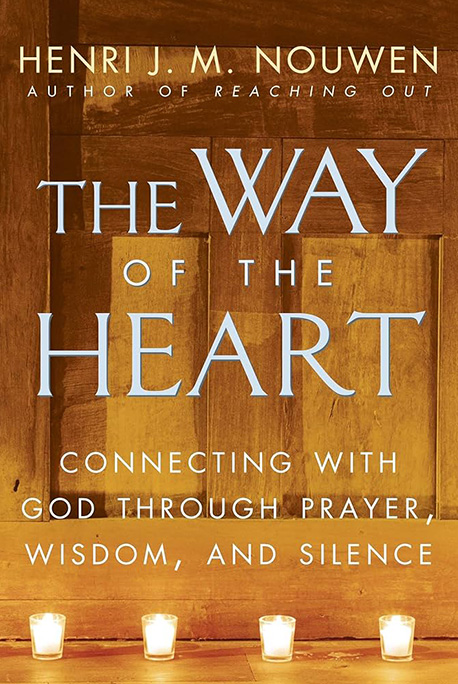
These transformative works reveal why the lowest posture leads to the highest ground.


ABOUT US
Where This Devotional Was Born
Sanctuary Clinics is a Christ-centered residential mental health treatment center in Florida. We exist for those who have tried everything else—where clinical excellence meets authentic Christian community for complete healing of spirit, mind, and body.
- Christ-Centered Care – Faith isn’t an add-on; it’s the foundation of everything we do
- Clinical Excellence – Evidence-based psychiatric care from experts who are also believers
- Healing Community – Not a hospital with a chaplain, but an Acts 2 community living together
- Affordable & Accessible – Quality care that doesn’t require choosing between healing and financial ruin