

CORE COMPETENCY 9 OF 12
Reconciling
Mending What Was Broken—With God, Others, and Yourself
Reconciling is the sacred, courageous work of restoring what mental illness has torn apart. It is learning to forgive—not because the wound wasn’t real, but because carrying the weight of bitterness will crush your recovery. It is rebuilding bridges with the people your illness hurt. And it begins with accepting the reconciliation God has already offered you through Christ.
“All this is from God, who reconciled us to himself through Christ and gave us the ministry of reconciliation.”
2 Corinthians 5:18
Why This Matters for Recovery
Healing the Wounds Between Us
Unforgiveness is a second illness. Reconciliation is its cure.
Forgiving Others

Forgiveness is not saying what happened was okay. It is refusing to let the person who hurt you continue to control your peace. It is the decision to set a prisoner free—and discovering that the prisoner was you.
Forgiving Yourself

Perhaps the hardest reconciliation of all: making peace with who you’ve been during your illness. The things you said, the people you hurt, the years you lost. God offers you a grace you must learn to extend to yourself.
Restoring Relationships

Mental illness is a wrecking ball that swings through families. Reconciling means doing the slow, humble work of rebuilding trust—one honest conversation, one kept promise, one amend at a time.
Receiving God's Peace

Before you can reconcile with anyone else, you must accept the reconciliation God has already made. Through Christ, the gap between you and God has been closed. You are already welcomed home.
Going Deeper
Understanding Reconciliation
The hardest work in recovery is often not clinical—it’s relational.
What Is Reconciliation?
The word “reconcile” comes from the Latin reconciliare—to bring together again, to restore to friendship. It implies that something was once whole, was broken, and is now being mended. This is the story of every human relationship touched by mental illness.
But reconciliation is not the same as pretending nothing happened. It is not rugsweeping. It is not forced togetherness. True reconciliation is the courageous process of naming what was broken, grieving what was lost, and choosing—together—to build something new.
“If it is possible, as far as it depends on you, live at peace with everyone.”— Romans 12:18
Notice Paul’s careful language: “If it is possible… as far as it depends on you.” Reconciliation requires two willing parties. You can only control your half. But your half matters enormously. Doing your part—offering forgiveness, making amends, extending grace—frees you regardless of whether the other person reciprocates.
Why Reconciliation Matters for Recovery
Mental illness does not happen in a vacuum. It ripples outward, touching every relationship in its path. Parents are exhausted and frightened. Spouses feel helpless and abandoned. Children are confused. Friends pull away, not from cruelty, but from not knowing what to do. And the person at the center of it all carries a crushing weight of guilt for the damage their illness has caused.
Unresolved relational wounds are one of the most powerful triggers for relapse. The shame of what you’ve done, the anger at what was done to you, the grief of relationships that may never fully recover—all of this becomes fuel for the illness to reignite.
The Clinical Connection
Research in psychoneuroimmunology reveals that unforgiveness activates the body’s stress response system—elevating cortisol, increasing inflammation, suppressing immune function, and disrupting sleep. Chronic unforgiveness has been linked to depression, anxiety, cardiovascular disease, and weakened treatment outcomes. Conversely, studies show that the practice of forgiveness measurably reduces depressive symptoms, lowers blood pressure, improves sleep quality, and strengthens the therapeutic alliance that drives recovery. Forgiveness is not merely a spiritual virtue—it is a clinical intervention.
This is why reconciliation work is not a “nice-to-have” in recovery—it is clinically essential. The relational wounds must be addressed alongside the neurological ones. Healing the mind without healing the relationships leaves the job half done.
The Biblical Foundation
The entire story of Scripture is a story of reconciliation. From the first fracture in Eden to the final restoration in Revelation, God’s relentless pursuit has been to bring back together what sin tore apart. He did not wait for humanity to come to Him—He came to us.
“But God demonstrates his own love for us in this: While we were still sinners, Christ died for us.” — Romans 5:8
This is the pattern for all reconciliation: someone must move first. Someone must absorb the cost. Someone must say, “I will not wait for you to earn this—I will offer it freely.” God did this through Christ. And He invites us to do the same with one another.
Consider the parable of the prodigal son. The father did not stand at the door with arms crossed, waiting for an apology. He ran. He ran to meet his broken, filthy, ashamed child—and he threw a feast. This is God’s posture toward you. And it is the posture He calls you to take toward the people in your life who need your grace, even when they don’t deserve it.
And then there is Joseph—sold into slavery by his own brothers, falsely imprisoned, forgotten for years. When he finally had the power to destroy them, he wept and said: “You intended to harm me, but God intended it for good.” Reconciliation does not deny the wound. It redeems it.
“To forgive is to set a prisoner free and discover that the prisoner was you. The chains of bitterness bind the one who holds them far more than the one they were meant for.” — Lewis B. Smedes
Wisdom from Those Who Walked Before
The saints who speak most powerfully about forgiveness are those who had the most to forgive. Their words are not theoretical—they are forged in the fire of real suffering and real grace:
“Forgiveness is not an occasional act, it is a permanent attitude. It is the fragrance the violet sheds on the heel that has crushed it.” — Martin Luther King Jr.
“When we forgive evil we do not excuse it, we do not tolerate it, we do not smother it. We look the evil full in the face, call it what it is, let its horror shock and stun and enrage us, and only then do we forgive it.” — Lewis B. Smedes
“Not to forgive is to be imprisoned by the past, by old grievances that do not permit life to proceed with new business. Not to forgive is to yield oneself to another’s control. Not to forgive is to sentence yourself to a life defined by your wounds.” — Frederick Buechner
Martin Luther King Jr. wrote about forgiveness while sitting in a Birmingham jail, targeted by a system designed to destroy him. Lewis Smedes developed his theology of forgiveness after years of personal grief and counseling others through devastating betrayals. Frederick Buechner channeled his own father’s suicide and a lifetime of pain into some of the most honest writing about grace the church has ever produced. These were not people who found forgiveness easy. They were people who found it necessary.
A Prayer for Reconciliation
If your heart is heavy with unforgiveness—toward someone who hurt you, toward yourself, or toward God for allowing your suffering—this prayer is for you. Reconciliation begins not with a feeling, but with a willingness to begin.
“Father, there are wounds I have been carrying for so long that they have become part of me. I do not know how to put them down. There are people I need to forgive but cannot seem to release. There are things I have done that I cannot seem to forgive myself for. And there are moments when I have been angry even at You. Meet me here, in this tangled mess of hurt and resentment. I do not have the strength to forgive on my own—but I am willing. Take my willingness and turn it into freedom. Teach me to receive Your reconciliation so deeply that it overflows into every broken relationship in my life. In Jesus’ name, Amen.” — A Prayer for Mending

Let Healing Reach Every Wound
Receive free daily devotionals delivered straight to your inbox—morning and evening Scripture, wisdom from the saints, and practical steps for your recovery journey.
- Morning & Evening readings
- Wisdom from the saints
- 100% free, unsubscribe anytime
Join thousands walking the recovery journey together. We respect your privacy.
Companion Reading
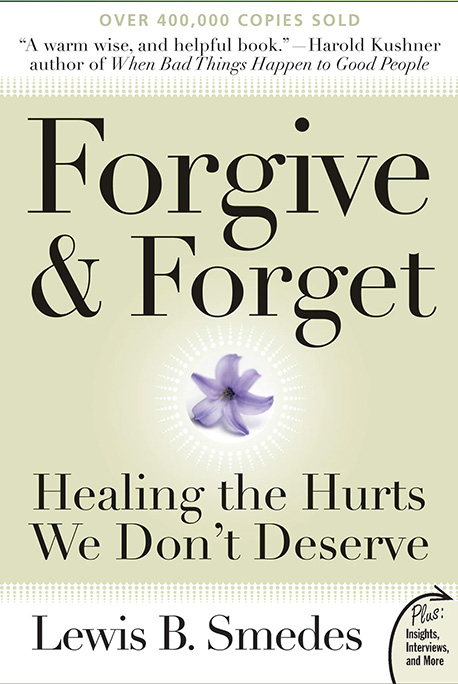
Go Deeper into Forgiveness
These powerful works illuminate the path from brokenness to restoration.


ABOUT US
Where This Devotional Was Born
Sanctuary Clinics is a Christ-centered residential mental health treatment center in Florida. We exist for those who have tried everything else—where clinical excellence meets authentic Christian community for complete healing of spirit, mind, and body.
- Christ-Centered Care – Faith isn’t an add-on; it’s the foundation of everything we do
- Clinical Excellence – Evidence-based psychiatric care from experts who are also believers
- Healing Community – Not a hospital with a chaplain, but an Acts 2 community living together
- Affordable & Accessible – Quality care that doesn’t require choosing between healing and financial ruin